Types of Sewing Machine Stitches and Their Uses (With Diagrams)
The types of sewing machine stitches explained with diagrams: straight, zigzag, three-step zigzag, stretch, blind hem, overlock, buttonhole, basting and decorative stitches, with the settings and presser foot for each.
· 7 min read
As an Amazon Associate we earn from qualifying purchases. Details

Most sewing machines come with anywhere from 10 to 200 stitches, but you’ll use a handful of them for nearly everything. This guide explains the main types of sewing machine stitches, what each one is for, and the settings and presser foot that make it work. Each stitch has a simple diagram, so you can match it to the symbols on your own machine.
Keep a scrap of the fabric you’re sewing beside the machine and test each new stitch on it first. Thirty seconds of testing saves an hour of unpicking.
Every stitch at a glance
- 1Straight stitch: seams, hems, topstitching
- 2Zigzag: finishing edges, stretch, appliqué
- 3Three-step zigzag: elastic and mending
- 4Triple stretch stitch: strong seams that stretch
- 5Blind hem: invisible hems on skirts and trousers
- 6Overcast or overlock: seam and edge in one
- 7Buttonhole: a satin stitch rectangle
- 8Basting: long temporary stitches
- 9Decorative scallop: trims and edges
| Stitch | Use it for | Typical setting | Foot |
|---|---|---|---|
| Straight | Seams, hems, topstitching, quilting | Length 2.5 mm | All-purpose (J) |
| Zigzag | Finishing raw edges, knits, appliqué | Width 3 to 5 mm, length 1.5 to 2 mm | All-purpose (J) |
| Three-step zigzag | Sewing on elastic, mending tears | Width 5 mm, length 1 mm | All-purpose (J) |
| Triple stretch | Seams in knits, crotch seams, bags | Preset | All-purpose (J) |
| Blind hem | Invisible hems | Width 2 to 3 mm | Blind hem foot |
| Overcast | Finishing edges without a serger | Preset | Overcasting foot |
| Buttonhole | Buttonholes | Automatic | Buttonhole foot |
| Basting | Gathering, fitting, holding layers | Length 4 to 5 mm, low tension | All-purpose (J) |
| Satin | Appliqué edges, monograms | Length 0.3 to 0.5 mm | Satin stitch foot |
| Decorative | Trims, hems, crazy quilting | Preset | Satin stitch foot |
Straight stitch
The straight stitch is the workhorse: it sews about 90% of every project. It’s one stitch after another in a straight line, and you control it with the stitch length.
- 2.5 mm for everyday seams in woven cotton and linen.
- 2 mm for tight curves and fine fabric.
- 3 to 3.5 mm for topstitching, thick fabric and denim.
- 1.5 to 2 mm for quilt piecing, so seams don’t come apart at the ends.
On most machines you can also move the needle position left or right, which is handy for sewing close to a zipper or edgestitching. New to it? Our guide to sewing a straight seam has easy practice drills.
Zigzag stitch
The zigzag swings the needle from side to side. It’s the stitch that makes a basic machine so useful:
- Finishing raw edges so they don’t fray: sew along the edge so the right swing of the needle just falls off the fabric.
- Sewing knits, because a narrow zigzag (width 1 to 1.5 mm) stretches with the fabric.
- Appliqué, at a short length so the stitches sit close together.
- Bar tacks at the top of pockets, at zero length.
Width controls how far the needle swings; length controls how far apart each zig is. When the length is very short, the zigzag becomes a solid satin stitch.
Three-step zigzag
Instead of one stitch per zig, this stitch takes three small ones. It lies flatter than a plain zigzag and won’t create a ridge, which makes it the best stitch for sewing elastic onto waistbands and lingerie, and for mending tears: stitch over the tear and the tiny stitches pull it closed. It’s sometimes called a multi-stitch zigzag or tricot stitch.
Stretch stitches
Stretch stitches go forward, back and forward again, so the seam can stretch without the thread snapping. The triple straight stitch is the strongest seam a domestic machine can sew; use it on knits, crotch seams, bags and anything that takes strain. The lightning bolt stitch (a tiny, narrow zigzag) gives a seam that looks almost straight but stretches with T-shirt fabric.
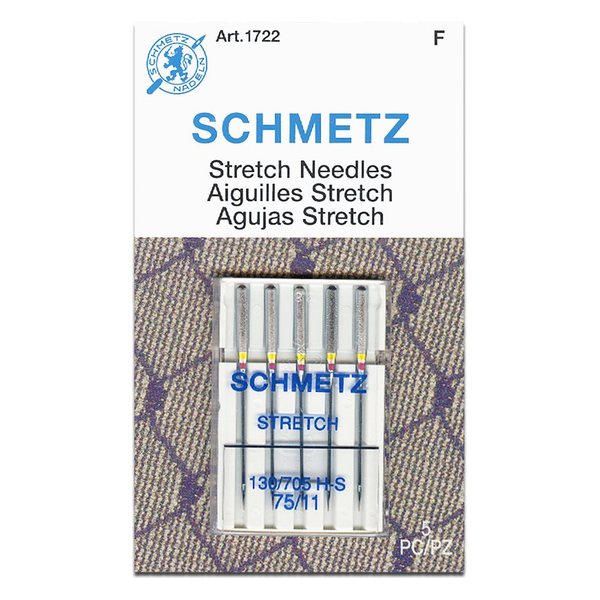
Use a Schmetz stretch needle for knits, or you’ll get skipped stitches no matter which stitch you pick.
Blind hem stitch
The blind hem stitch sews a few straight stitches in the hem allowance, then one sideways bite that catches just a thread or two of the skirt or trousers. Folded correctly, almost nothing shows on the right side. Fold the hem up, then fold it back on itself so ¼” of the hem edge sticks out, and line the fold up with the guide on the blind hem foot.
It’s perfect for skirts, curtains and trousers. If you’d rather sew it by hand, see how to hem pants by hand.
Overcast or overlock stitch
Most machines have one or two overcast stitches that sew a seam and wrap the edge in one pass, like a simple serger. With the overcasting foot, the little bar on the foot holds the edge flat so it doesn’t tunnel. It’s a good finish for seams when you don’t own a serger.
A real serger trims and wraps the edge at the same time and is much faster on garments; our what is a serger guide explains the difference.
Buttonhole stitch
The buttonhole stitch is a narrow rectangle of satin stitches with a bar tack at each end. Most modern machines make a one-step buttonhole: put the button in the back of the buttonhole foot, pull down the buttonhole lever and the machine sizes it for you. Older machines use a four-step buttonhole, where you turn the dial for each side and end.
Our guide to sewing a buttonhole on a sewing machine walks through both, and there’s a hand-sewn buttonhole guide for vintage machines without one.
Basting stitch
Basting is a long straight stitch (4 to 5 mm) used to hold things together temporarily: for fitting, for holding a zipper in place, or for gathering. To gather, sew two rows of basting stitches inside the seam allowance, leave long tails, and pull the bobbin threads to gather the fabric up.
Lower the top tension one number when basting, and the stitches pull out easily afterward.
Satin and decorative stitches
Satin stitch is a zigzag at a very short length, so the stitches lie side by side in a smooth band. It’s used for appliqué edges and monograms. Decorative stitches (scallops, vines, hearts, leaves, Greek keys) are pretty on hems, trims, quilts and gifts. Always put a piece of tear-away stabilizer under thin fabric so dense stitches don’t pucker.
How to choose a stitch for your project
- Woven seam (cotton, linen): straight stitch, 2.5 mm.
- Knit seam (T-shirts, leggings): lightning bolt or triple stretch, with a stretch needle.
- Raw edge that frays: zigzag or overcast, or a serger.
- Elastic waistband: three-step zigzag, stretching the elastic as you sew.
- Hem on a skirt or trousers: blind hem, or straight stitch on casual clothes.
- Quilt piecing: straight stitch, 1.8 to 2 mm, ¼” seam.
- Gathering a skirt or ruffle: two rows of basting.
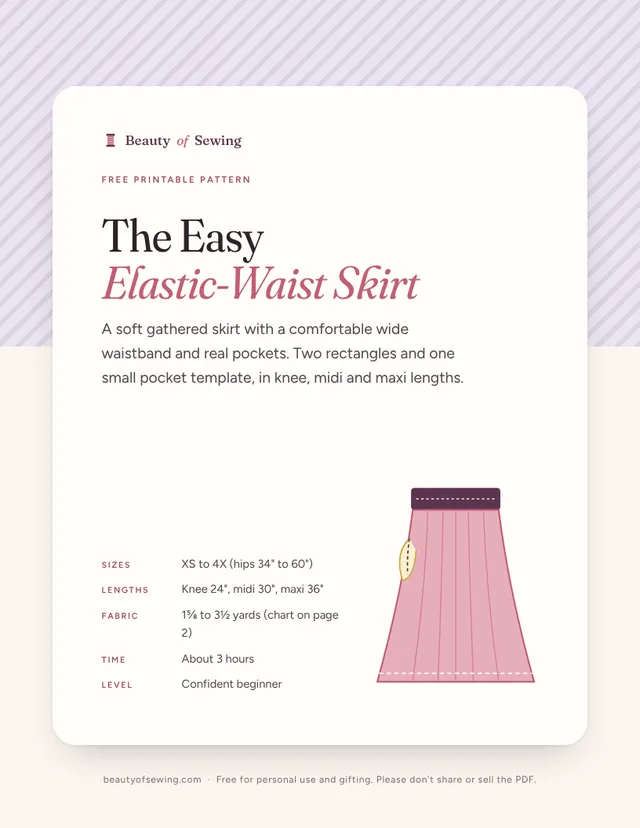
Try them on our free elastic-waist skirt pattern: straight seams, a zigzag finish and an elastic casing, all in one afternoon.
Getting good stitches every time
Stitch problems are usually the same three culprits:
- The needle. Change it every 8 hours of sewing and match it to the fabric. Our sewing machine needles guide has a chart.
- The thread. Cheap thread breaks, fluffs and makes uneven stitches. Gütermann Sew-All is a reliable all-rounder; see our best thread for sewing machines.
- The threading. If loops appear under the fabric, rethread the top with the presser foot up. Our threading library covers 15 machines step by step.
If you’re just getting to know your machine, start with how to use a sewing machine. Shopping for one with more stitches? Our best sewing machines for beginners compares models side by side, and the Brother CS7000X review looks at a popular 70-stitch machine.
Sewing machine stitch FAQs
What are the three basic machine stitches?
Straight stitch, zigzag stitch and the buttonhole. With those three you can sew almost any garment, bag or home project.
What is the strongest sewing machine stitch?
The triple straight stitch (also called a stretch straight stitch). It sews each stitch three times, so it’s ideal for bags, seat seams and anything that takes strain.
Which stitch stops fabric from fraying?
A zigzag or overcast stitch along the raw edge. Sew with the needle’s right swing just off the edge of the fabric. Pinking shears are a quick alternative on cotton.
What stitch do I use for stretchy fabric?
A narrow zigzag, the lightning bolt stitch or a triple stretch stitch, always with a stretch or ballpoint needle. A plain straight stitch will snap when the fabric stretches.
Why do I need so many stitches?
You don’t. Most sewists use four or five for everything. Extra stitches are lovely for decoration, but a machine with a good straight stitch, zigzag, blind hem and one-step buttonhole covers every project.