The Best Sewing Machines for Beginners, Compared Side by Side
Our beginner sewing machine picks by what you want to sew: best overall, budget, simplest, heavy fabrics, quilting and embroidery. Comparison table, easy-threading notes and honest answers to beginner questions.
· 7 min read
As an Amazon Associate we earn from qualifying purchases. Details

A good first sewing machine doesn’t need a hundred stitches or a touchscreen. It needs to thread easily, feed fabric evenly, start gently, and keep going for years without a trip to the repair shop. Everything else is a bonus.
We chose these machines by how they feel to use in the first year: how easy they are to thread, how clearly you can see the needle, how they handle a beginner’s mistakes, and whether they’ll still suit you once you’ve moved past pillowcases. Whether you’re learning for the first time or coming back to sewing after many years away, there’s a machine here for you.
Our beginner picks at a glance
| Machine | Best for | Needle threader | Bobbin | Controls | Price tier |
|---|---|---|---|---|---|
| Brother CS7000X | Best overall | Automatic | Top drop-in | Computerized, speed slider | $200 to $400 |
| Brother XM2701 | Budget and lightweight | Automatic | Top drop-in | Dial | Under $200 |
| Singer Simple 3232 | Simplest controls | Automatic | Top drop-in | Dial | Around $200 |
| Singer Heavy Duty 4423 | Denim and thicker fabric | Automatic | Top drop-in | Dial | Under $200 |
| Janome 2212 | A no-frills mechanical workhorse | By hand | Front-loading | Dial | $200 to $400 |
| Brother XR3774 | Beginners who want to quilt | Automatic | Top drop-in | Dial | Around $200 |
| Brother SE700 | Sewing plus embroidery | Automatic | Top drop-in | Touchscreen | $400 to $800 |
What makes a sewing machine good for beginners
Before the picks, here is what we looked for, in order of importance. If you’re comparing a machine that isn’t on this list, use these as your checklist.
Easy threading
An automatic needle threader and a top drop-in bobbin under a clear cover make the biggest difference to how much you enjoy sewing in the first few weeks. Threading problems cause most beginner frustration, and these two features remove most of them. Our threading library has step-by-step guides for every machine on this page.
Speed control
A speed slider lets you cap the top speed, so a heavy foot on the pedal can’t send the fabric racing. Computerized machines like the Brother CS7000X have one. Mechanical machines rely on a gentle foot.
Good light and a clear view of the needle
Bright LED lights over the needle make threading and following a seam much easier. If you have any trouble seeing small details, put this near the top of your list. A lamp helps too: see our lighting guide.
A weight you can manage
A lighter machine is easier to lift out of a cupboard. A heavier one stays put and vibrates less. If the machine will live on a table, weight matters less. If you’ll carry it to classes, aim for under 15 pounds.
Fewer stitches than you think
You will use straight stitch, zigzag and a buttonhole for 95 percent of your sewing. More stitches are pleasant but not essential, so don’t pay extra for them on a first machine. Our guide to the types of sewing machine stitches shows what each one is for, and once your machine arrives, start with how to use a sewing machine.
The best sewing machine for beginners overall
The best budget sewing machine for beginners
The simplest sewing machine to learn on
The best beginner machine for denim and thicker fabric
The best no-frills mechanical machine
The best beginner sewing machine for quilting
The best sewing and embroidery combo for beginners
How to choose between them
If you just want to start sewing
Choose the Brother CS7000X. It’s the easiest machine here to thread and to control, and it will still suit you in five years.
If budget comes first
Choose the Brother XM2701, or the Singer Simple 3232 if you’d like a metal frame and the simplest possible controls.
If you sew thick fabric
Choose the Singer Heavy Duty 4423, and use a jeans needle. Our sewing machine needles guide explains which.
If threading is hard for you
Avoid machines without an automatic needle threader and stick to a top drop-in bobbin. Every pick except the Janome 2212 has both. Our sewing tools for arthritis guide has more ideas.
What else you need to start sewing
The machine is only half of it. These few things make the first projects go smoothly, and none of them cost much.
- Good thread. Gutermann Sew-All runs cleanly through every machine here. Our thread guide explains why cheap thread causes so many beginner problems.
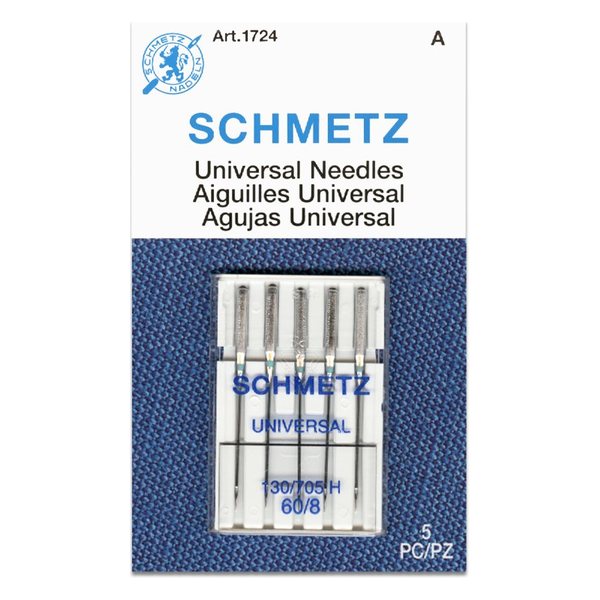
- Fresh needles. A pack of Schmetz universal needles. Change the needle every eight hours of sewing.
- Sharp scissors and a seam ripper. You’ll use the seam ripper more than you’d like, and that’s normal.
- Pins or clips. Clover Wonder Clips are easy on the fingers.
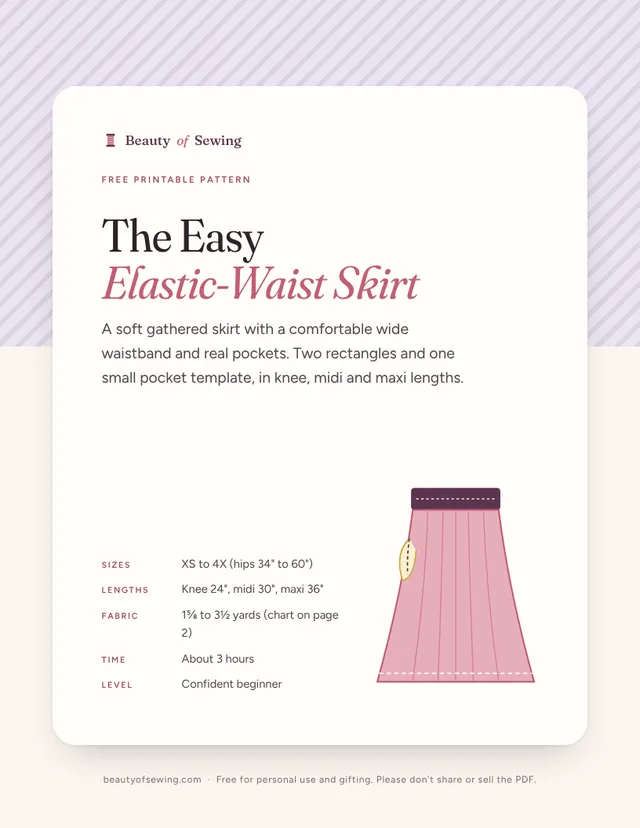
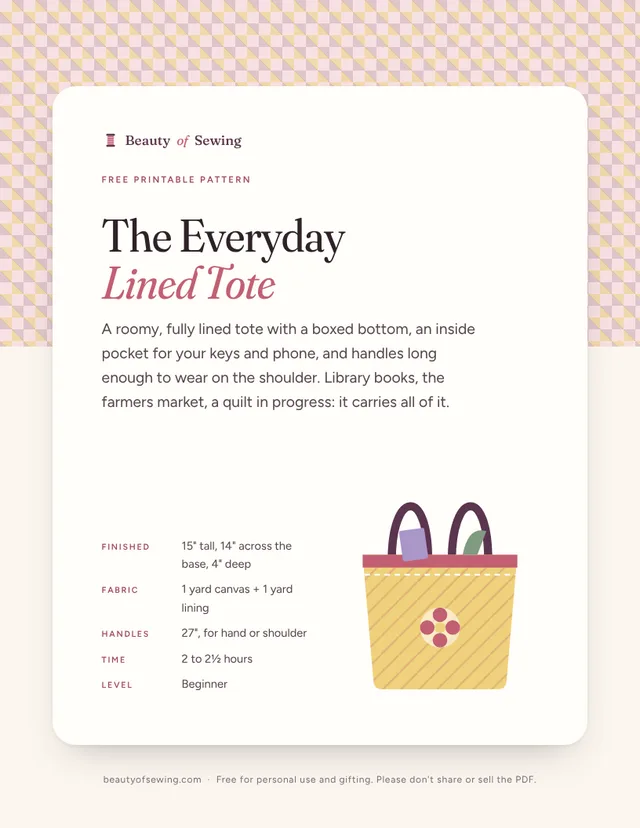
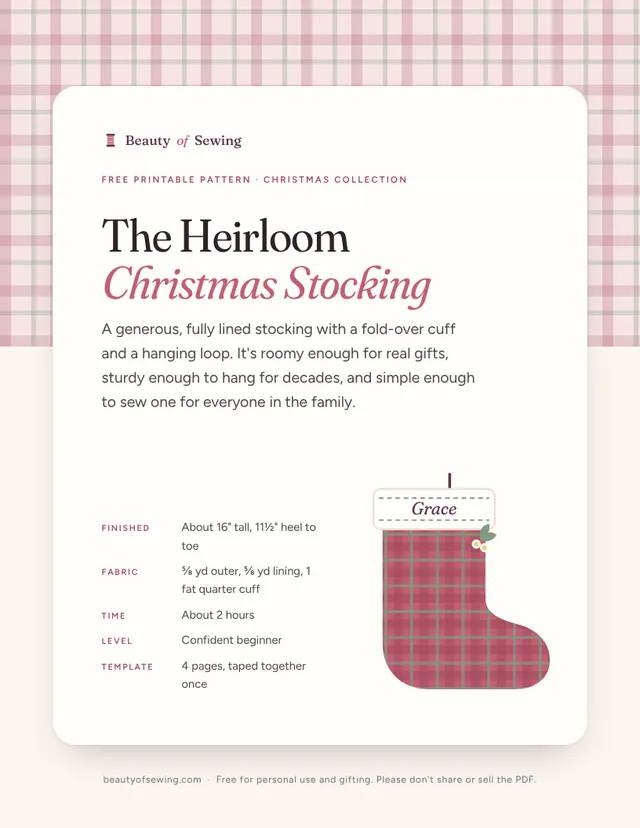
- A first project. Our free Easy Drawstring Project Bag and the free sewing patterns are written for beginners, with every step illustrated. Not sure which to start with? Our free what should I sew quiz picks one for your skill level and the time you have.
Beginner sewing machine questions
What is the easiest sewing machine for a beginner to use?
The Brother CS7000X. The automatic needle threader, drop-in bobbin and speed slider remove the three biggest beginner frustrations. The Singer Simple 3232 is the easiest if you prefer a dial over buttons.
Should a beginner buy a mechanical or computerized sewing machine?
Either works. Mechanical machines like the Singer 3232 and Janome 2212 are simple and have little to go wrong. Computerized machines like the Brother CS7000X add speed control, needle up/down and an easy-to-read screen, which many beginners find easier, not harder.
How much should I spend on my first sewing machine?
Between $150 and $300 buys a machine that threads easily and lasts for years; see our picks for the best sewing machine under $200, under $300 and under $500. Below about $100, machines tend to skip stitches and are hard to service. See every machine we’ve rated, with price tiers, in our sewing machine reviews hub.
Is a heavy duty sewing machine good for beginners?
Yes, if you’ll sew denim, canvas or bags. Heavy duty machines run fast, so practice on scraps and press the pedal gently.
Do I need a serger as a beginner?
No. A sewing machine’s zigzag stitch finishes seams well enough for most projects. If you start sewing a lot of knits or clothing, a serger is a lovely second machine: start with what a serger is and our best serger for beginners.
Where can I find the manual for my machine?
Brother, Singer and Janome all post free manuals on their websites. Our threading library links to each brand’s manual page alongside step-by-step threading pictures.