How to price machine embroidery
Pricing is the part of an embroidery business that keeps people up at night. Charge too little and you work for free. Charge too much and the customer walks to the shop down the road. The fair answer is almost always the same: add up what the job costs you, pay yourself for your time, and then check the result against what the market expects. That is exactly what the calculator above does.
- Enter the stitch count and number of colors. Stitches set how long the machine runs, and colors set how many thread changes you make.
- Choose your machine. A home machine sews slower and needs you to change thread by hand, so each color adds a minute. A multi-needle machine changes color in seconds.
- Set your hourly rate and handling time. Hooping, trimming jump threads, tearing away stabilizer and folding the finished piece all take time, and that time is worth money.
- Add the blank, stabilizer and thread, then a markup on materials.
- Read the price per piece, your profit and the effective hourly rate you will earn. Then look at the price break table to quote bigger orders.
Two ways embroiderers price their work
Price per 1,000 stitches
The classic shop method is a rate for every thousand stitches, often $0.75 to $1.50, plus the cost of the garment and a minimum charge per piece. It is quick to quote and customers understand it. Its weakness is that it ignores everything except stitching. A 3,000 stitch name on a bulky bath towel can take longer to hoop than to sew, and a per-stitch price alone will undercharge for it. The calculator shows a per-stitch check under the breakdown so you can compare.
Price by time and cost
The more honest method counts the real minutes. Sewing time comes from stitches divided by your machine speed, plus color changes. Add hooping and handling for every piece, plus setup for the whole order: threading up, a test stitch-out and checking the design. Multiply the minutes by your hourly rate, add marked-up materials, and you have a price that pays you properly whatever the job looks like. This is the number shown as Charge per piece.
Typical stitch counts
If a customer asks for a ballpark before you have a file, these ranges will get you close. The real count depends on how solid the design is and how it was digitized.
| Design | Usual size | Stitch count |
|---|---|---|
| Name or short word | 3 to 4 in wide | 1,500 to 3,500 |
| Three-letter monogram | 2 to 3 in | 3,000 to 6,000 |
| Left chest logo | 3.5 to 4 in wide | 5,000 to 10,000 |
| Cap front | 2 by 4.5 in | 5,000 to 12,000 |
| Embroidered patch | 3 in | 8,000 to 15,000 |
| Sleeve or small motif | 2 to 3 in | 2,000 to 5,000 |
| Full jacket back | 10 to 12 in | 30,000 to 80,000 |
Want to try a simple name or monogram yourself? Our free monogram and name embroidery file maker shows the exact stitch count for anything you type, which you can drop straight into this calculator.
Pricing common embroidery jobs
Names and monograms on towels and blankets
Personalized gifts sell on emotion, not stitch count, so there is room to charge well. Thick towels and minky blankets need a water-soluble topper and careful hooping, so give yourself four or five handling minutes and add the topper to the stabilizer cost. A good monogrammed bath towel often sells for $25 to $40 with the towel included.
Hats and caps
Caps are slower to hoop and harder on the machine, and a ruined cap can’t be fixed. Many shops add $2 to $3 per cap or use a slightly higher per-stitch rate. Bump your hooping minutes up to four or five and you will see the effect straight away.
Business logos on polos and workwear
Business orders are where bulk price breaks matter. The setup and digitizing are the same whether the order is for 6 shirts or 60, so the price per piece falls as the order grows. Use the price break table to offer tiers like 1 to 11, 12 to 23 and 24 plus, and always quote digitizing as a separate one-time line.
Customer-supplied items
When someone brings their own jacket or a sentimental quilt, set the blank cost to zero. Then raise your handling time or add a flat fee, because you are taking on the risk of stitching on something you can’t replace.
Costs people forget to include
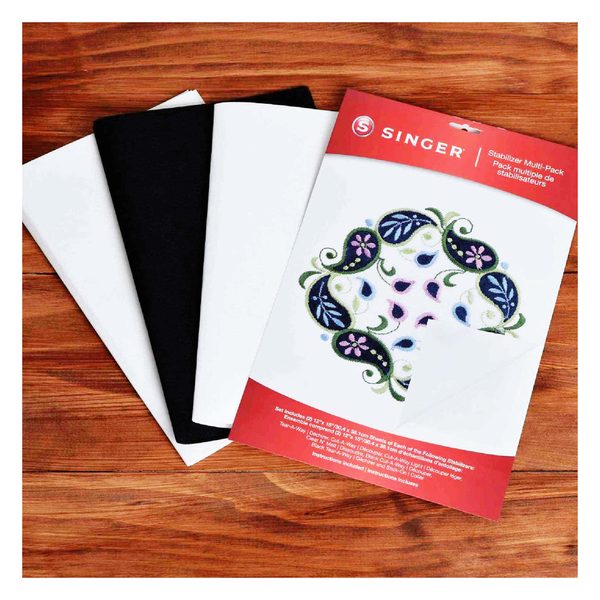
- Stabilizer and toppers. Cut-away, tear-away and water-soluble film add 20 to 60 cents a piece. Keep a good supply of embroidery stabilizer in several weights so you always have the right one.
- Thread and bobbins. Small per piece, but a 5,000 yard cone of 40 weight polyester embroidery thread only goes so far. Prewound bobbins save time on long runs.
- Needles and machine wear. Change needles every eight to ten hours of stitching. Our sewing machine needles guide explains which sizes to keep on hand.
- Spoiled pieces. Every embroiderer ruins a shirt now and then. Your markup on blanks is there to cover it.
- Your admin time. Emails, mockups, invoicing and shipping are real work. If they take a lot of time, add them to setup minutes.
- Digitizing. A clean file is what makes a logo sew well. Paying for good digitizing usually costs less than the shirts a bad file will ruin.
How to earn more from every order
Look at the You earn per hour figure. If it is below what you set as your hourly rate, the markup is too low or the job is taking longer than you think. A few habits raise it without scaring customers off:
- Set a minimum order charge, so one-off names still pay for the setup.
- Offer price breaks at 12 and 24 pieces to nudge customers into bigger orders.
- Charge a rush fee of 25 to 50 percent for anything needed in under a week.
- Sell the finished item, not just the stitching. Supplying the towel or tote and marking it up is often where the profit is.
- Keep good light at the machine. Fewer mistakes means fewer spoiled blanks, and our guide to the best lighting for sewing has easy options.
Looking for more free help? Browse every free embroidery tool, read up on the best thread for your machine, or head back to the Beauty of Sewing home page for patterns, reviews and guides.
Questions people ask
How much should I charge for embroidery per 1,000 stitches?
Most home and small-shop embroiderers in the US charge between $0.75 and $1.50 per 1,000 stitches, plus the blank, with a minimum of $6 to $10 per piece. Busy commercial shops with fast multi-needle machines can go lower on big orders. Use the per-stitch rate as a sanity check, and the time and cost price above as your real number.
How much should I charge to embroider a name?
A name on a towel or a bag is usually 1,500 to 3,500 stitches, so it sews in a few minutes. Most people charge $8 to $15 for the embroidery alone, plus the item if you supply it. Hooping a thick towel takes longer than the stitching, so make sure your handling minutes reflect that.
How do I find the stitch count of a design?
Your machine shows it when you select the design, and so does most embroidery software. If you only have a picture, open the "Don’t know the stitch count?" box in the calculator and enter the size and how solid the design is. It gives a fair estimate you can quote from.
Should I charge for digitizing separately?
Yes. Digitizing is a one-time cost to turn artwork into a stitch file, and most shops charge it once per design, not per piece. Many waive it on large repeat orders. Enter it in the calculator and it is spread across the order so you can see what it adds per item.
How much should I mark up blanks?
A markup of 30 to 100 percent on shirts, hats and towels is normal. It covers the time you spend ordering, the ones that get spoiled, and the money tied up in stock. If the customer brings their own item, set the blank cost to zero and charge a little more for handling, since you carry the risk of ruining it.
Does this calculator work for the UK or Europe?
Yes. Pick pounds or euros from the currency menu and type in your own costs. The maths is the same everywhere: stitches, time, materials and markup.