The French knot has a reputation, and it is mostly undeserved. It is a little raised dot made by wrapping the thread around the needle and going back down right beside where you came up. Done well, it adds texture nobody can resist touching: flower centres, berries, strawberry seeds and baby’s breath.
Almost every problem comes from one of two things: going back down in the exact same hole, or letting the wraps go loose. Fix those, and your knots will sit up neatly every time.
French knot step by step
- 1Up at 1, hold the thread
- 2Wrap twice round the needle
- 3Down just beside 1
1. Come up where the knot goes
Bring the needle up at the spot where you want the knot (1). Hold the working thread taut with your other hand.
2. Wrap twice
Lay the needle across the thread and wrap the thread around it twice, close to the fabric. Keep holding the thread taut so the wraps stay snug.
3. Go down beside the start
Still holding the thread, put the needle tip back into the fabric just beside where you came up (2), about one fabric thread away. Never in the same hole.
4. Pull through slowly
Slide the wraps down the needle to sit on the fabric, then pull the needle through to the back while keeping the thread taut until the last moment.
Tips for a neat French knot
- Change the size with strands, not wraps. Two wraps with two or three strands looks neater than four wraps with one.
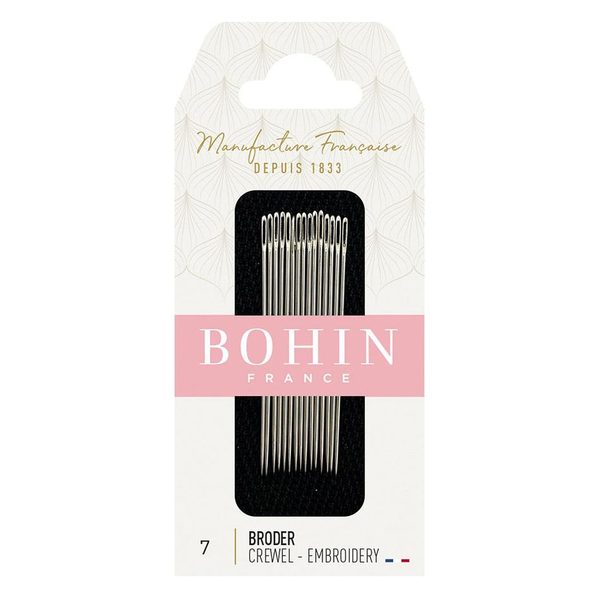
- Use a needle with a narrow eye, like a straw or milliner needle, so the wraps slide off cleanly.
- Keep tension on the thread with your free hand until the needle is almost all the way through.
- Stitch French knots last, after the rest of the design, so your thread never catches on them.
Common French knot problems and fixes
My knot pulled through to the back
The needle went down in the same hole it came up. Go down one fabric thread away so there is something to hold the knot.
My knot is loose and loopy
The thread went slack while you pulled through. Keep it taut with your other hand until the needle has passed through the wraps.
My knots are different sizes
Keep the wraps and strands the same for every knot, and wrap close to the fabric, not up near the needle eye.
Where to use French knot
- Flower centres
- Berries and seeds on strawberries
- Baby’s breath and tiny buds
- Eyes, dots over an i, snow
What you need to practice
As an Amazon Associate we earn from qualifying purchases. Details
A 5 or 6 inch wooden hoop, a scrap of washed cotton or linen, DMC six-strand floss and a pack of crewel needles in sizes 5 to 9. Small eyes are hard work after a long day, so a good needle threader helps; we tested the options in our needle threader guide. Good light matters too: see our sewing light picks.
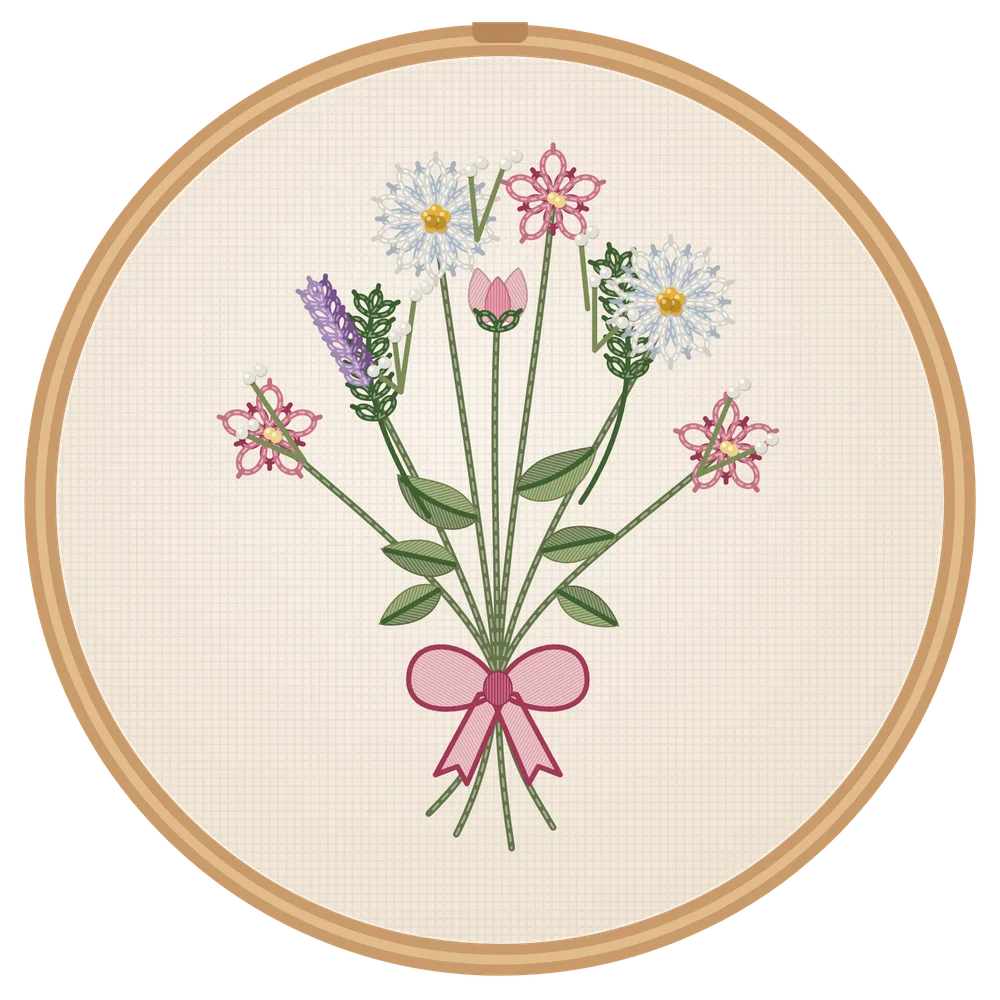
The best practice piece is a real project. Every one of our free hand embroidery patterns includes a stitch guide with these same diagrams.
French knot questions
How many wraps for a French knot?
Two wraps is the standard. For a bigger knot, use more strands rather than more wraps, which keeps it neat and round.
Why does my French knot keep disappearing?
You are going back down in the exact same hole. Move one fabric thread away from where the needle came up.
What is the difference between a French knot and a colonial knot?
A colonial knot uses a figure-eight wrap instead of a coil. It sits a little higher and holds its shape well, but French knots are easier to learn first.