What you'll need
As an Amazon Associate we earn from qualifying purchases. Details
- Cotton flannel, quilting cotton or seersuckerAbout 2⅝ yd of 44" fabric for a 40" leg. The chart lists other lengths.
- 1" wide elasticYour waist measurement, for a casing that won't roll or twist.
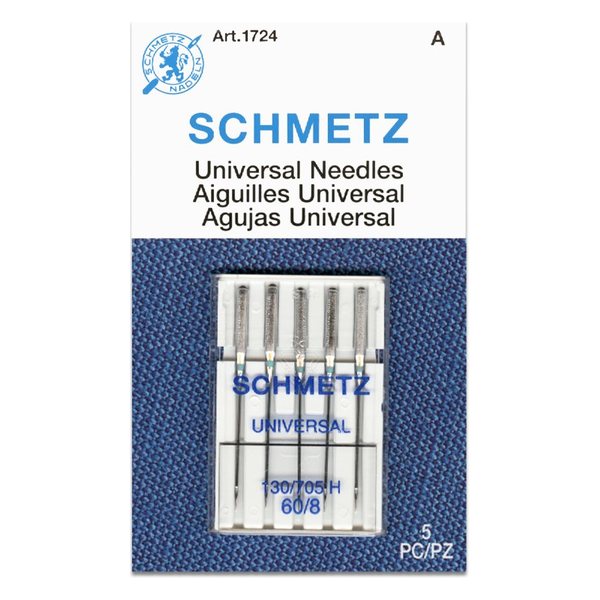 Schmetz universal needles, assortedA fresh needle in the right size is the easiest fix for skipped stitches.Shop on Amazon
 Gütermann Sew-All polyester threadStrong all-purpose thread that won't snap on thick seams or fade in the wash.Shop on Amazon
 Brother 1034DX serger (optional)Trims and finishes seams in one pass so the inside looks store-bought.Shop on Amazon
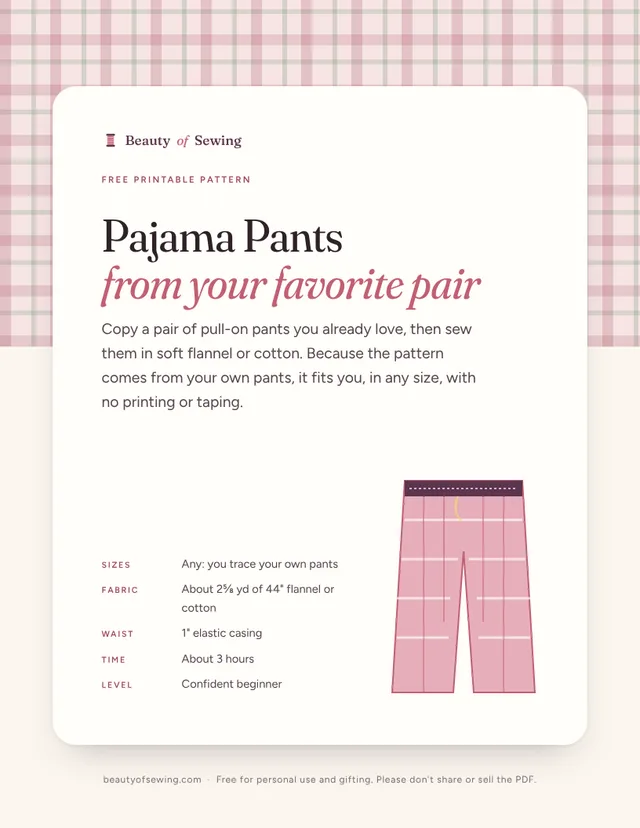
The pajama pants you love most are already the perfect pattern. This free pajama pants pattern shows you how to trace a pair of loose, pull-on pants you already own, add the allowances, and sew a new pair in soft flannel or cotton. Because the pattern comes from your own pants, it fits you in any size, with nothing to print or tape together.
What’s in the free pajama pants PDF
- Seven pages with tracing diagrams, a fabric chart and six sewing steps.
- A tracing method that works for any size and any body.
- A hip check so you know your pattern is roomy enough before you cut.
- A close-up of the crotch seam, the one curved seam, sewn in a single pass.
- A troubleshooting page for a tight seat, a rolling waistband and legs that twist.
Choose the pants to copy
Pick a pair of loose, pull-on pants that fit the way you want your pajamas to fit: pajama bottoms, lounge pants or elastic-waist trousers. Avoid jeans, fly fronts and stretchy leggings.
How much fabric for pajama pants
Measure the outside of one leg, from the top of the waist to the hem. Buy 2 × (that + 3”) + 6”.
| Leg length | 44” fabric |
|---|---|
| 36” | 2⅜ yd |
| 40” | 2⅝ yd |
| 44” | 2⅞ yd |
If your hips are over 50”, add ½ yd so the front and back can be cut one above the other.
How to make and sew pajama pants
1. Trace the front and back
Fold the pants so one leg sits on the other, pull the crotch point out flat, and trace. The back curve is longer and deeper than the front, so trace each separately.
2. Add allowances and check the fit
Add ⅝” seams, 1½” at the waist for the casing and 1½” at the hem. Then measure: twice the front and back widths together should be at least your hips plus 4”.
3. Sew six seams
Sew the side seams and inseams, then the whole crotch curve in one go. Finish with a 1” elastic casing and simple hems. If you’d rather hem by hand, see how to hem pants by hand.
Make them yours
- Add a pocket on the side seam or a patch pocket on the back.
- Match plaids by lining the front and back hems up on the same stripe.
- Finish seams on a serger for pants that survive years of washing. Our best serger for beginners guide can help you choose.
Sew a matching top from our boxy top pattern or a peasant nightgown, and a pillowcase in the leftover flannel.
Questions about this pattern
How do you make a pajama pants pattern from your own pants?
Fold a pair of pull-on pants in half so one leg lies on the other, pull the crotch point out flat and trace round the front, then flip and trace the back. Add seam, casing and hem allowances and you have a pattern that fits.
How much fabric do I need for pajama pants?
Measure the outside leg of your pants from waist to hem. Buy twice that plus 3 inches, plus 6 inches for shrinkage. That is 2⅜ yards for a 36 inch leg, 2⅝ yards for 40 and 2⅞ yards for 44. Add ½ yard if your hips are over 50 inches.
What is the best fabric for pajama pants?
Cotton flannel for winter and cotton lawn or seersucker for summer. Prewash flannel twice, because it can shrink 5 percent or more.
Why trace pants instead of using a sized pattern?
Commercial sizes rarely match your shape. Copying pants that already fit means the rise, hip and leg are right first time, in any size, and nothing needs printing or taping.