1Scrappy Mug Rug
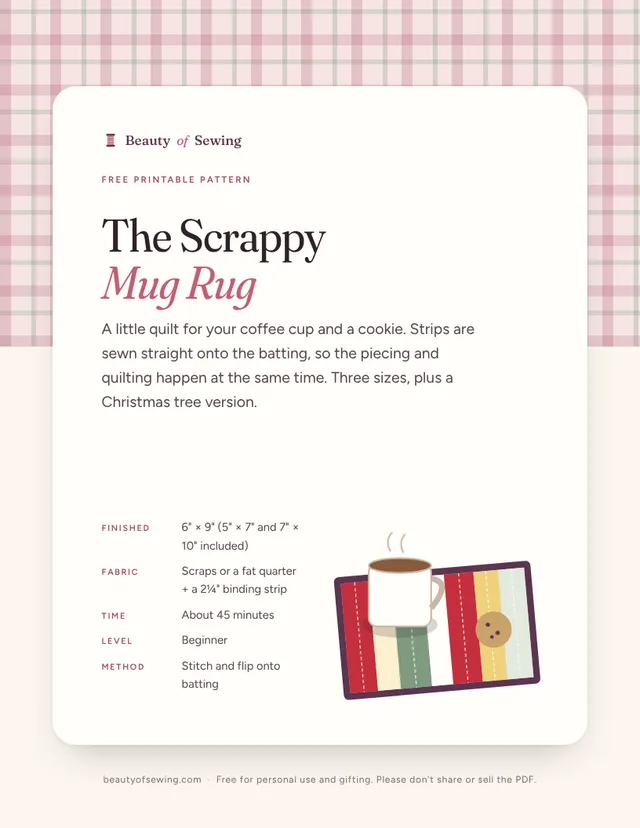
Strips of any width are sewn straight onto the batting, so wonky leftovers are fine. The most popular scrap buster on the site.
Scraps you need: Strips 1½" to 3" wide
Free printable patterns · scrap busters
Twelve free patterns sorted by the size of scrap they use, from narrow strips to leftover half yards. Clear a drawer, make a stack of gifts and never feel guilty about that scrap bin again.
4 free projects
Strips and odd shapes no wider than your hand. These projects were made for them.
Strips of any width are sewn straight onto the batting, so wonky leftovers are fine. The most popular scrap buster on the site.
Scraps you need: Strips 1½" to 3" wide
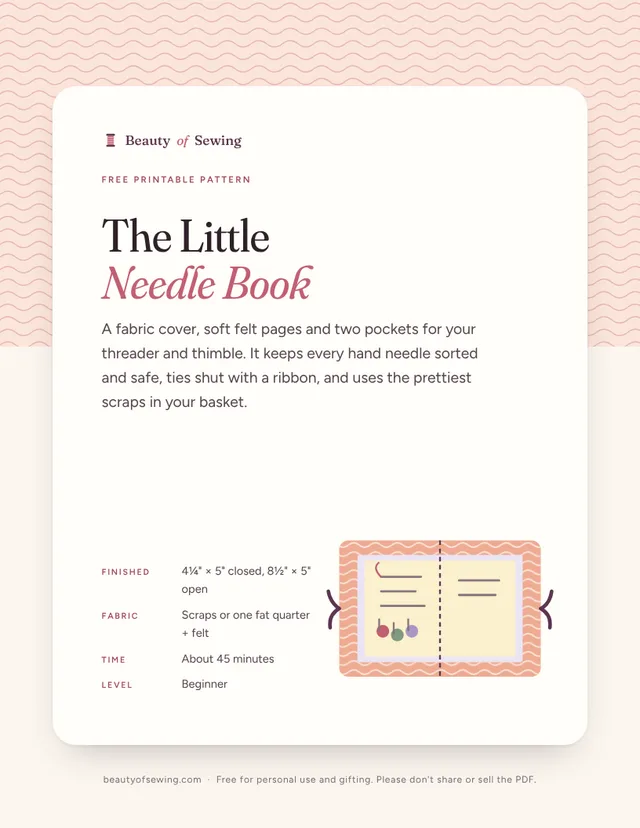
The cover is only 9 × 5 inches. Piece it from two or three scraps for a patchwork look.
Scraps you need: Pieces about 9" × 5"
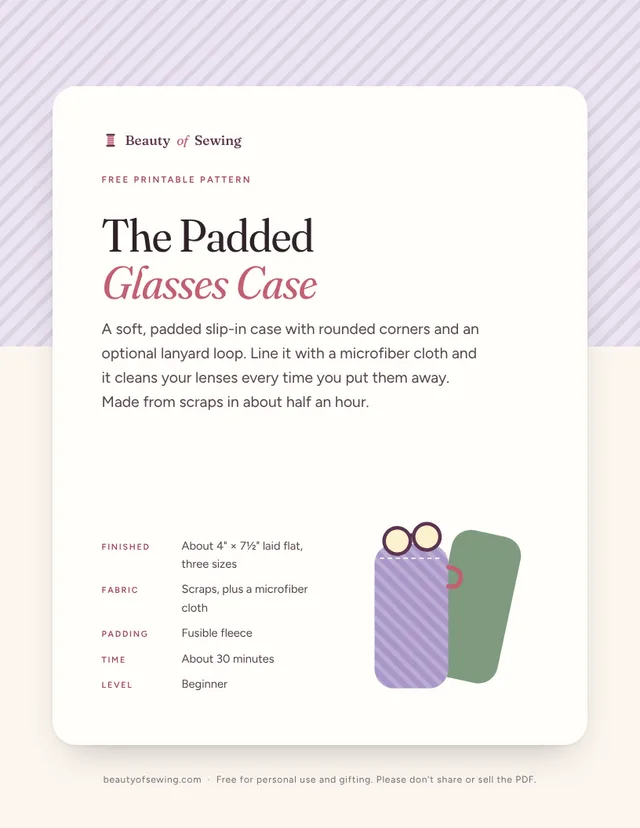
Two pieces about 9 × 8 inches for the outer and lining. A great home for a scrap you love too much to cut small.
Scraps you need: Pieces about 9" × 8"
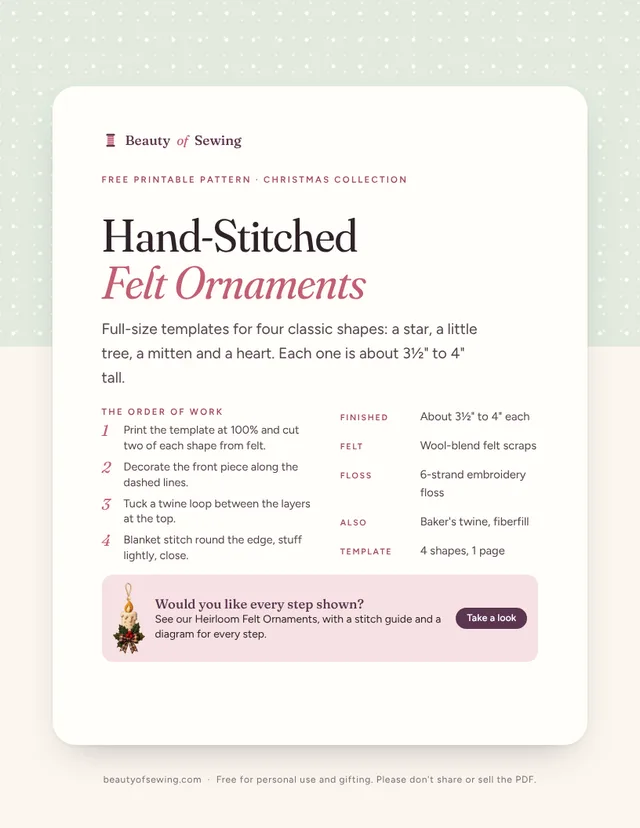
Wool-blend felt offcuts in red, green and cream become hearts, stars and trees. No hemming, because felt does not fray.
Scraps you need: Felt scraps
5 free projects
Pieces around 9 to 12 inches, the leftovers from bags and quilts that are too nice to throw away.
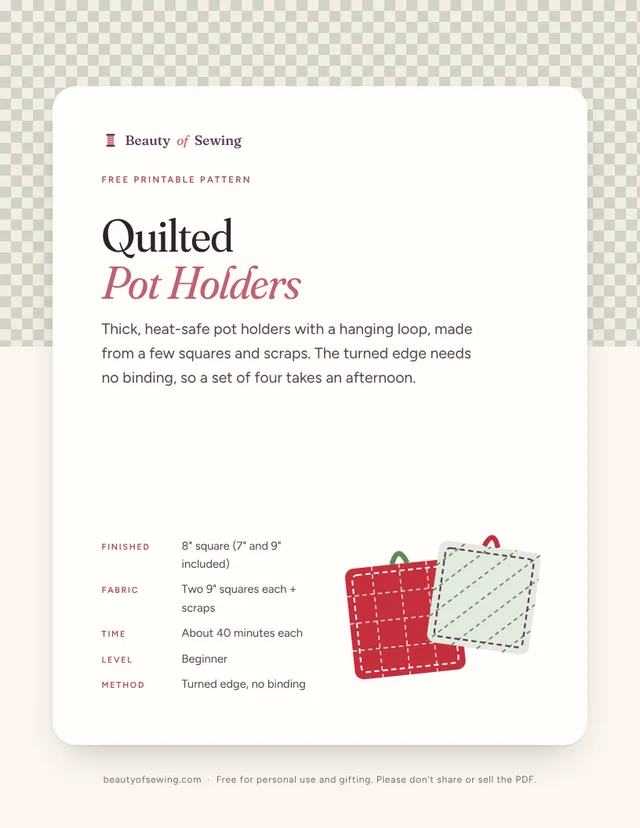
Two 9" squares each, plus scraps for the hanging loop. Mismatched fronts and backs look charming.
Scraps you need: Two 9" squares each
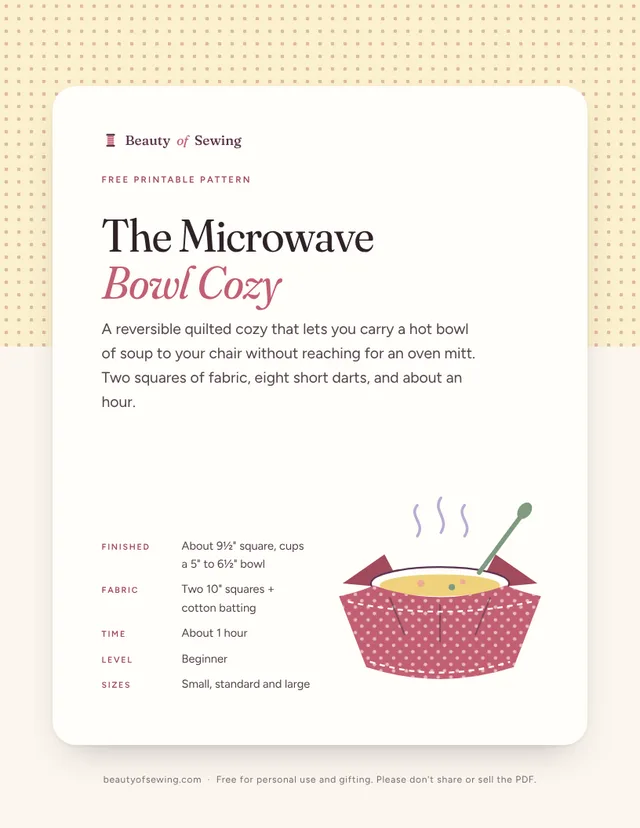
Two 10" squares and a square of cotton batting. A batch of four takes one evening and clears out a drawer.
Scraps you need: Two 10" squares each
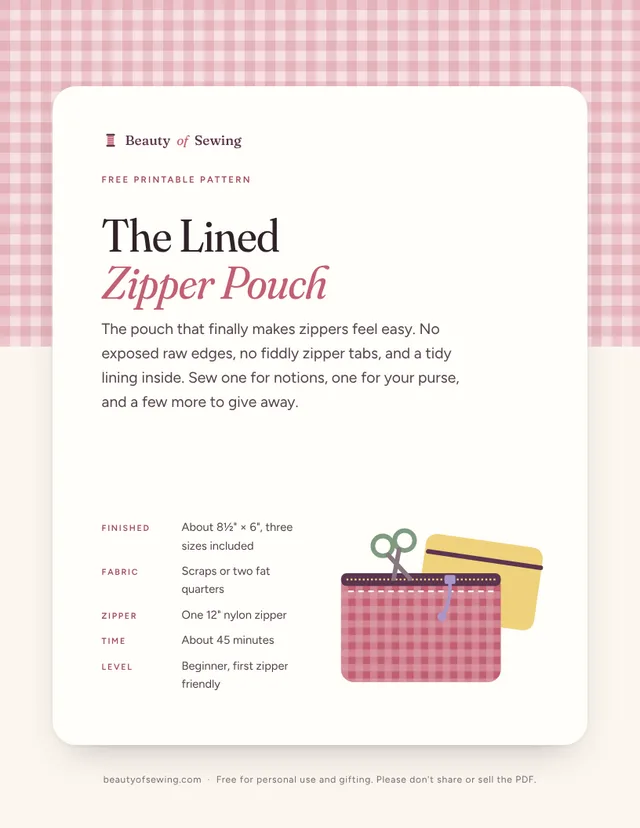
The small size is cut from two 9" pieces. Use a scrap of something special for the outer and a plain one for the lining.
Scraps you need: Pieces about 9" × 7"
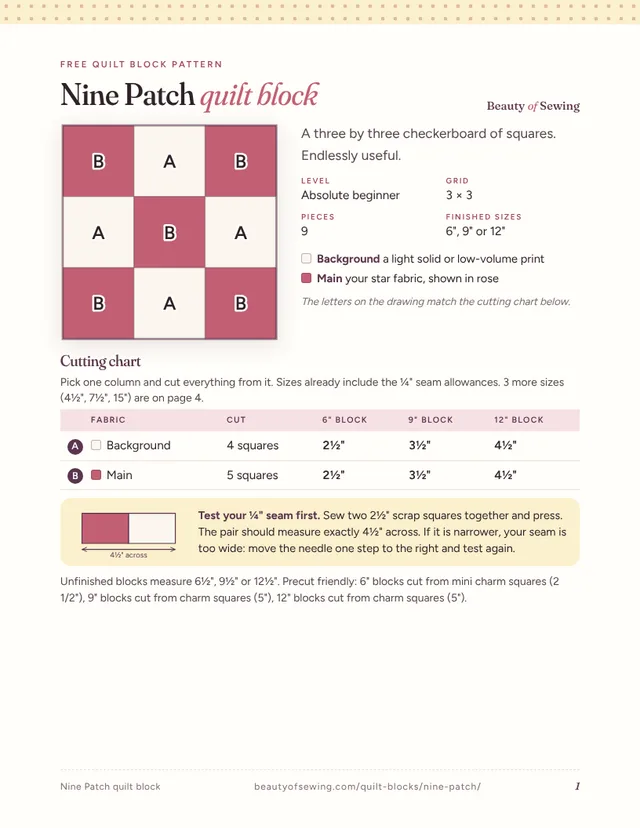
Nine 2½" or 3½" squares make a block. Sew scrappy Nine Patches as leaders and enders between other projects and a quilt appears.
Scraps you need: 2½" or 3½" squares
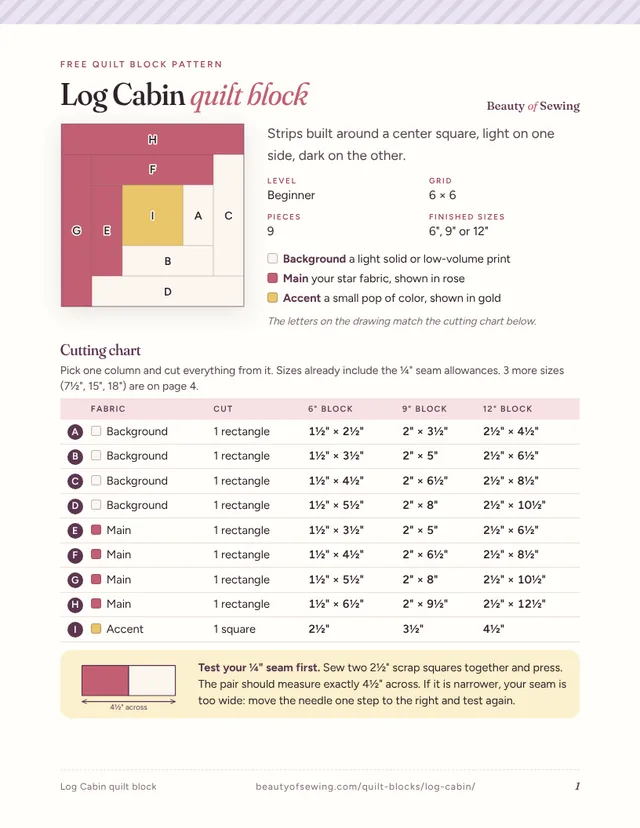
Made entirely from strips, so it is the classic way to use up long leftovers. Light strips on one side, dark on the other.
Scraps you need: Strips 1½" to 2½" wide
3 free projects
Half yards and fat quarters left from finished projects.
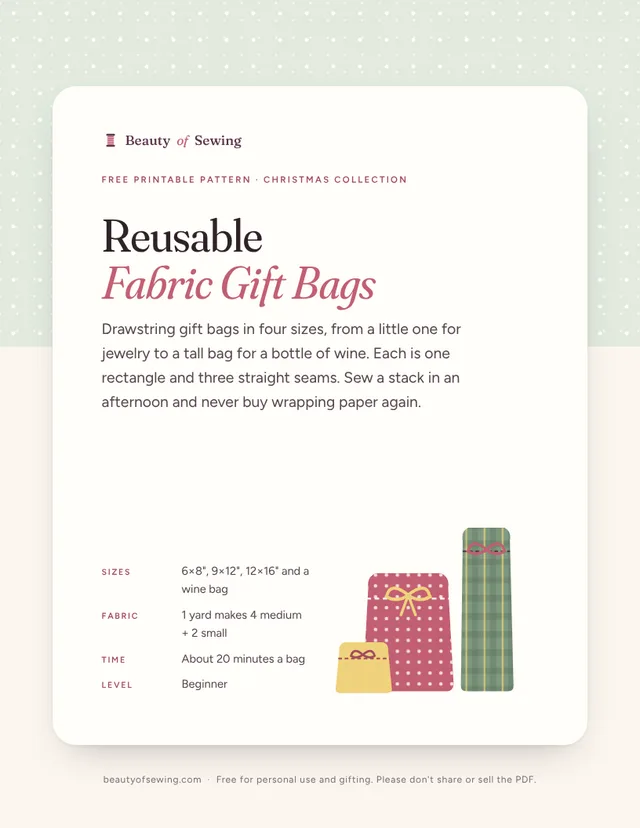
A gift bag is just a rectangle. Use whatever you have left: a 9 × 12 inch bag fits a candle or a jar of jam.
Scraps you need: Any rectangle 7" × 18" or bigger
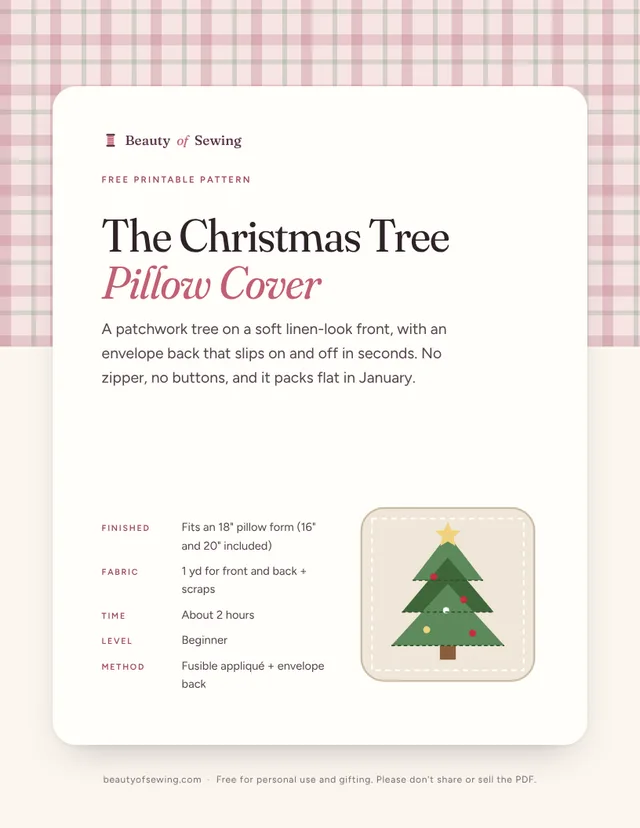
The patchwork tree is pieced from green scraps of every shade. The more prints you use, the better it looks.
Scraps you need: Green scraps + 1 yd for the cover
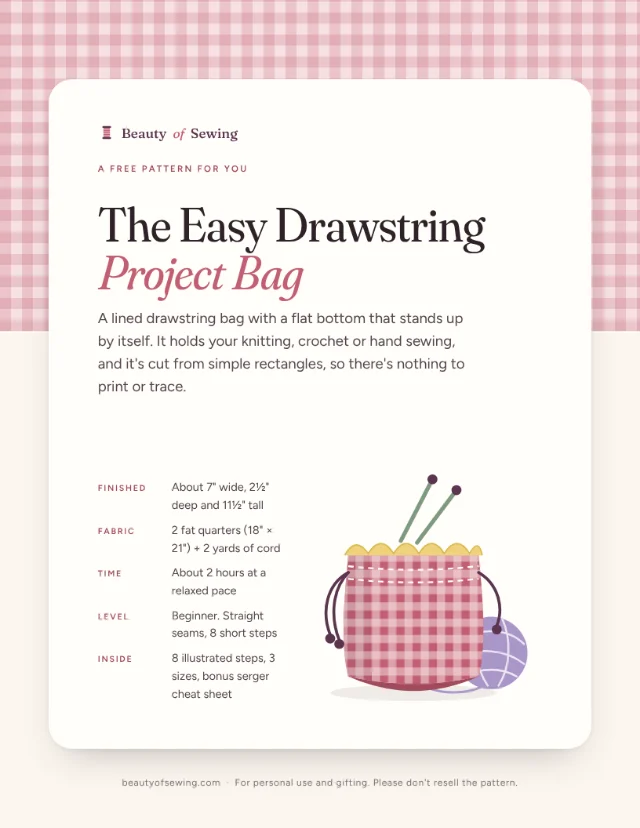
Our free gift for joining our sewing notes. The drawstring project bag uses two small pieces of fabric, outer and lining.
Scraps you need: Two pieces about 18" × 22"
Measure your biggest pieces, then pick a project from this table. Anything at least 2 inches wide still has a home.
| Project | Time | Level | Scraps you need |
|---|---|---|---|
| Scrappy Mug Rug | About 45 minutes | Beginner | Strips 1½" to 3" wide |
| Little Needle Book | About 45 minutes | Beginner | Pieces about 9" × 5" |
| Padded Glasses Case | About 30 minutes | Beginner | Pieces about 9" × 8" |
| Felt Christmas Ornaments | 30 to 45 minutes each | Beginner, sewn by hand | Felt scraps |
| Quilted Pot Holders | About 40 minutes each | Beginner | Two 9" squares each |
| Microwave Bowl Cozy | About 1 hour | Beginner | Two 10" squares each |
| Lined Zipper Pouch | About 45 minutes | Beginner | Pieces about 9" × 7" |
| Nine Patch quilt block | About 30 minutes | Absolute beginner | 2½" or 3½" squares |
| Log Cabin quilt block | About 30 minutes | Beginner | Strips 1½" to 2½" wide |
| Reusable Fabric Gift Bags | About 20 minutes a bag | Beginner | Any rectangle 7" × 18" or bigger |
| Christmas Tree Pillow Cover | About 2 hours | Beginner | Green scraps + 1 yd for the cover |
| Easy Drawstring Project Bag | 1½ to 2 hours | Confident beginner | Two pieces about 18" × 22" |
The secret to actually using scraps is to cut them into standard sizes as soon as a project is finished, while the iron is still hot. Keep four boxes and every scrap has a place.
| Box | What goes in | Use it for |
|---|---|---|
| Strips | 2½" and 1½" strips, any length | Mug rugs, Log Cabin and Rail Fence blocks, binding |
| Small squares | 2½" and 3½" squares | Nine Patch and Four Patch blocks |
| Big squares | 5", 9" and 10" squares | Pot holders, bowl cozies, charm quilts |
| Odd shapes | Anything bigger than your hand | Needle books, glasses cases, pouch linings |
Throw away (or stuff into a pincushion) anything smaller than 2 inches. It is too small to sew accurately, and keeping it only makes the useful pieces harder to find.
Sew two 5" squares right sides together with a square of batting, turn through a gap and topstitch. Four take half an hour.
Cut triangles about 7" tall from any cotton, sew them in pairs, turn and press, then sew them along a length of bias tape. A lovely use for prints you only have a little of.
Cut circles, gather the edge with a running stitch by hand and pull tight. They make a relaxing armchair project and look sweet on a pillow or a wreath.
Two 5" patchwork squares, stuffed firmly with crushed walnut shells or the tiny offcuts you were going to throw away.
Scrap quilts are some of the most loved quilts there are, because every piece has a story. Start with simple blocks from our free quilt block library: each one has a cutting chart for 6, 9 and 12 inch blocks. If you are new to it, our quilting for beginners guide walks through the whole process, and the binding guide uses up your strips at the end.
Have bigger pieces? See what to sew with fat quarters and what to sew with one yard of fabric. Making gifts? Our easy Christmas gifts to sew are mostly scrap friendly too.
We may earn a small commission if you buy through these links, at no cost to you. How we choose products.
Mug rugs, needle books, coasters, felt ornaments, pincushions and scrappy quilt blocks like the Nine Patch and Log Cabin. Strips as narrow as 1½ inches are still useful for mug rugs and log cabin blocks.
Sort by size, not color. Cut anything usable into a standard size as you finish each project: 2½" strips, 2½" and 5" squares. Keep each size in its own box and you will always have a project ready to sew.
Most quilters keep anything at least 2 inches in both directions. Smaller pieces are hard to sew accurately. If a piece is smaller than that, use it for stuffing a pincushion or toy.
A small pair of scraps you sew at the end of a seam instead of cutting the thread. It saves thread and stops the machine chewing the next seam, and over a few months those pairs add up to a whole scrap quilt.
Stick to similar weights in one project: quilting cottons together, or linens together. Mixing a stretchy knit with cotton makes seams pucker. Felt and fleece are best kept to their own projects.