What you'll need
As an Amazon Associate we earn from qualifying purchases. Details
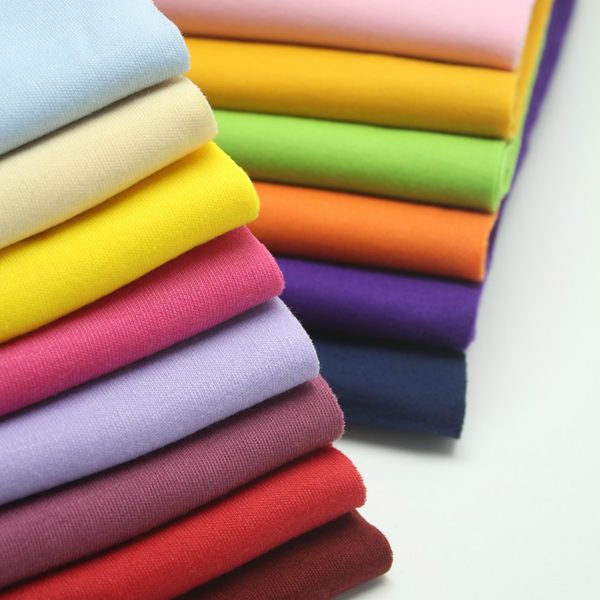 Quilting cotton, linen or light canvasAbout 1 yard for the outside and pockets.Shop on Amazon
- Quilting cotton for the liningAbout 1 yard.Shop on Amazon
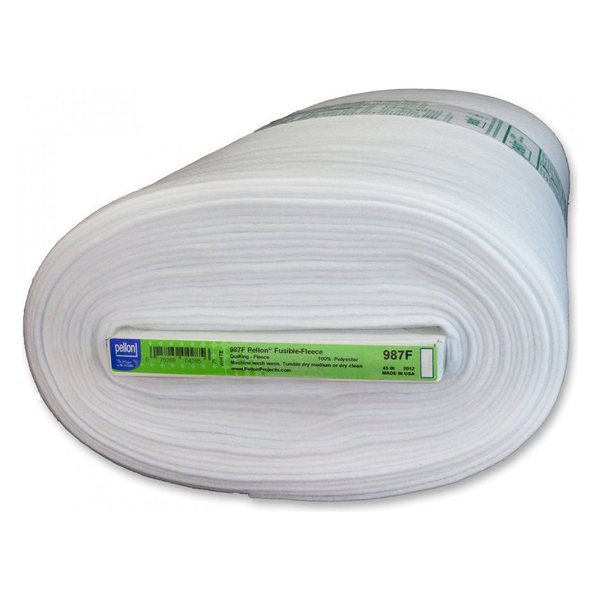 Pellon 987F fusible fleeceOptional, for a soft, padded cover that protects the machine from bumps.Shop on Amazon
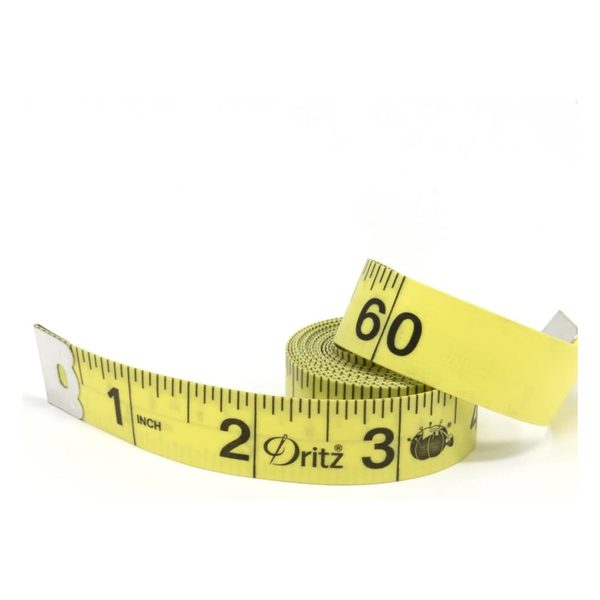 Flexible tape measureFor measuring your machine and checking the fit.Shop on Amazon
 Wonder ClipsHandy when easing the side panels around the curves.Shop on Amazon
Dust and lint are the slow enemies of every sewing machine and serger. They settle into the tension discs and around the feed dogs, and before long you’re dealing with skipped stitches and a machine that sounds tired. A fitted cover keeps them out between projects, and it turns the machine on your table into something pretty to look at.
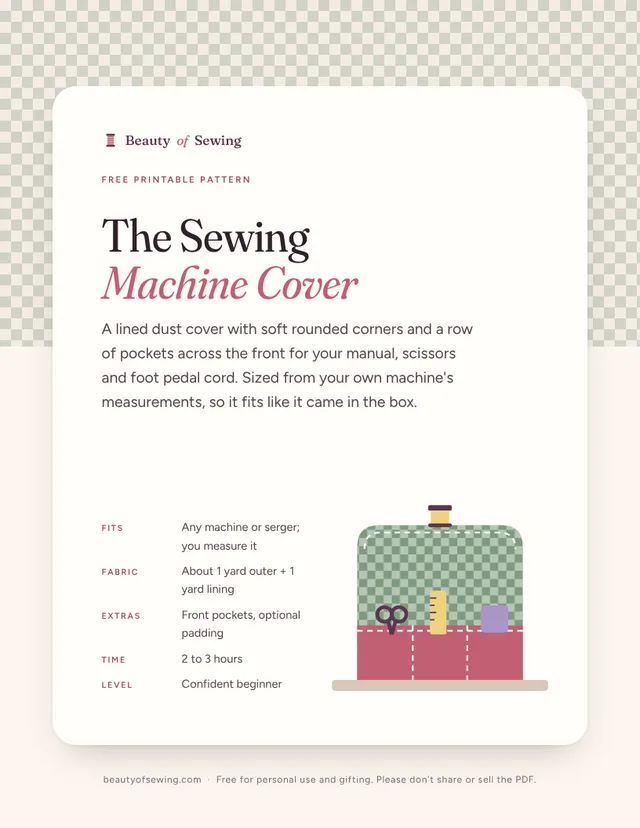
This free sewing machine cover pattern is made from three pieces: one long panel that runs over the front, top and back, plus two side panels with soft rounded corners. A row of pockets across the front holds your manual, scissors and the foot pedal cord.
What’s in the free machine cover PDF
- Seven pages in large, clear type, with a diagram for every step.
- A measuring guide with space to write your machine’s measurements.
- A cutting formula with a worked example, so the cover fits your machine, not a generic one.
- Six illustrated steps, from the pockets to the final topstitching.
- A full-size corner curve template, plus a test square to check your printer.
- Variations for a serger cover, a handle slot and a monogram.
How the cover comes together
First you measure your machine’s width, height and depth, round up, and plug the numbers into the formula. Cut the long main panel and two side panels from both the outer fabric and the lining, and round the top corners of the side panels with the template.
A folded pocket is basted across the front and divided into three. Then the side panels are sewn to the main panel, easing around the curves. The lining is made the same way, the two are joined around the bottom edge, and the cover is turned through a gap and topstitched.
Choosing fabric
Quilting cotton, linen and lightweight canvas all work well. Add fusible fleece behind the outer fabric if you’d like a soft, quilted feel that also cushions the machine from bumps. It’s a lovely way to show off a favorite print or a few leftover quilt blocks.
Tips for a good fit
- Measure with the spool on its pin and include the handwheel. Those are the spots that poke at a cover that was cut too snug.
- Match the centers before you sew each side panel. Pinning the bottom corners and the top center first spreads any ease evenly.
- Clip the seam allowance every ½ inch around the curves so the main panel lies flat.
Once your machine is tucked in, keep it running sweetly with our guide on how to clean a serger. Shopping for a new machine to cover? See our picks for the best sewing machines for seniors. The Little Needle Book is the perfect thing to tuck into one of the cover’s pockets.
Questions about this pattern
Will this sewing machine cover fit my machine?
Yes, because you size it from your own machine. You measure the width, height and depth, and a simple formula gives the cutting sizes, with about an inch of ease so the cover slips on and off easily. The PDF includes a worked example for a typical 16 by 12 by 7 inch machine.
Can I make a serger cover with this pattern?
Yes. The same formula works for any serger or coverstitch machine. Measure with the thread cones on so the cover clears them.
How much fabric do I need?
About one yard each of outer and lining fabric for most home machines. Machines wider than 18 inches or taller than 14 inches may need 1¼ yards of each.
Does my machine need a cover?
A cover keeps dust and lint out of the tension discs and feed dogs between projects, which means fewer skipped stitches and less cleaning. It's especially worthwhile if your machine lives on a table rather than in a cabinet.
Can I sell covers made from this pattern?
Yes, you are welcome to sell the covers you sew. Please share a link to this page rather than the PDF.