A flying geese unit is a rectangle with a large triangle (the goose) and two small triangles (the sky). Stack them and they look like a skein of geese heading home. This block stacks eight of them in two columns.
Geese are the points in the Sawtooth Star and Dutchman’s Puzzle, they make wonderful borders, and a column of scrappy geese is a quilt all on its own.
Flying Geese cutting chart for 6, 9 and 12 inch blocks
Pick the finished size you want and cut down that column. Every measurement already includes quarter-inch seam allowances. The fabrics are named for their job in the drawing: Background is a light solid or low-volume print, Main is your star fabric, shown in rose, Second is a contrast, shown in sage.
| Fabric | Cut | 6 in block | 9 in block | 12 in block |
|---|---|---|---|---|
| ABackground | 16 squarescorner squares for the flying geese | 2 | 2 3/4 | 3 1/2 |
| BMain | 4 rectanglesrectangles for the flying geese | 2 x 3 1/2 | 2 3/4 x 5 | 3 1/2 x 6 1/2 |
| CSecond | 4 rectanglesrectangles for the flying geese | 2 x 3 1/2 | 2 3/4 x 5 | 3 1/2 x 6 1/2 |
Unfinished block: 6 1/2, 9 1/2 or 12 1/2 inches. Precut friendly: 6 inch blocks cut from charm squares (5 in), 9 inch blocks cut from charm squares (5 in), 12 inch blocks cut from layer cake squares (10 in).
More sizes: 4, 8, 10 and 16 inch Flying Geese blocks
The same block, smaller for minis, pot holders and mug rugs, or bigger for fast bed quilts. The letters match the drawing above.
| Piece | Cut | 4 in block | 8 in block | 10 in block | 16 in block |
|---|---|---|---|---|---|
| ABackground | 16 squares | 1 1/2 | 2 1/2 | 3 | 4 1/2 |
| BMain | 4 rectangles | 1 1/2 x 2 1/2 | 2 1/2 x 4 1/2 | 3 x 5 1/2 | 4 1/2 x 8 1/2 |
| CSecond | 4 rectangles | 1 1/2 x 2 1/2 | 2 1/2 x 4 1/2 | 3 x 5 1/2 | 4 1/2 x 8 1/2 |
How to sew a Flying Geese block
1. Mark the sky squares
Draw a diagonal line on the wrong side of every Background square.
2. Sew the first corner
Lay a Background square on one end of a goose rectangle, right sides together, with the line running from the top center of the rectangle down to the bottom corner. Sew on the line, trim a quarter inch beyond it, and press the triangle open.
3. Sew the second corner
Repeat on the other end so the two lines meet at the top center, leaving a quarter inch above the point for the seam. Trim and press.
4. Stack the geese
Sew four Main geese into a column, all pointing up, and four Second geese into a second column. Sew the columns together.
Which way to press the Flying Geese seams
Measure as you sew
Check each unit before you join it. These are unfinished sizes, with the seam allowances still showing.
| Should measure | 6 in block | 9 in block | 12 in block |
|---|---|---|---|
| Flying geese unit | 2 x 3 1/2 | 2 3/4 x 5 | 3 1/2 x 6 1/2 |
| Each column, before joining | 3 1/2 x 6 1/2 | 5 x 9 1/2 | 6 1/2 x 12 1/2 |
| The whole block | 6 1/2 x 6 1/2 | 9 1/2 x 9 1/2 | 12 1/2 x 12 1/2 |
Tips for a neat Flying Geese
- Sew a thread’s width to the outside of the drawn line. When the triangle folds back, that tiny allowance keeps the unit full size.
- When joining geese, sew with the goose point facing up so you can stitch just through the X where the seams cross. The points stay sharp.
Before cutting for a whole quilt, sew one test block and measure it. If it comes out small, your seam is a little wide; if it is big, a little narrow. Fixing it now saves a lot of unpicking later. Our quilting for beginners guide covers the quarter-inch seam, pressing and squaring up.
If something looks off
- The block came out too small. Your seams are wider than 1/4 inch. Run the seam test on the first page, then re-sew the widest seams rather than stretching the block to fit.
- The goose point is blunt or hidden. There must be 1/4 inch of sky above each point. Trim the unit to size with the point 1/4 inch from the edge, and stitch just outside the X where the seams cross.
- One unit is facing the wrong way. Unpick just that unit and turn it. Next time lay the whole block out beside the machine and compare it with the picture before each seam.
- Seams are bulky where they meet. Press the two seams in opposite directions so they nest, as the pressing arrows show, or press them open where many points meet.
How many Flying Geese blocks for a quilt?
Here is how many blocks make each common quilt size, set edge to edge without sashing or borders. Borders make the quilt bigger, so you may need a row fewer. Plan your exact size with the quilt size chart and calculator.
| Quilt | 9 in blocks | 12 in blocks |
|---|---|---|
| Baby / cribabout 36 x 52 in | 24 (4 x 6)36 x 54 in | 12 (3 x 4)36 x 48 in |
| Lap / throwabout 50 x 65 in | 42 (6 x 7)54 x 63 in | 20 (4 x 5)48 x 60 in |
| Twinabout 70 x 90 in | 80 (8 x 10)72 x 90 in | 48 (6 x 8)72 x 96 in |
| Queenabout 90 x 108 in | 120 (10 x 12)90 x 108 in | 72 (8 x 9)96 x 108 in |
| Kingabout 108 x 108 in | 144 (12 x 12)108 x 108 in | 81 (9 x 9)108 x 108 in |
Ways to set Flying Geese blocks
Fabric for a Flying Geese quilt
Yardage for a whole quilt of 12 inch blocks set side by side, with no sashing or borders. It is worked out for 42 inch wide fabric and includes about 10 percent extra.
| Quilt | Baby | Throw | Twin | Queen |
|---|---|---|---|---|
| Size of the top | 36 x 48 in | 48 x 60 in | 72 x 96 in | 96 x 108 in |
| Blocks | 12 (3 x 4) | 20 (4 x 5) | 48 (6 x 8) | 72 (8 x 9) |
| Background | 2 yd | 3 1/4 yd | 7 1/2 yd | 11 1/4 yd |
| Main | 7/8 yd | 1 1/2 yd | 3 1/2 yd | 5 1/4 yd |
| Second | 7/8 yd | 1 1/2 yd | 3 1/2 yd | 5 1/4 yd |
| Binding (2 1/2 in strips) | 3/8 yd | 1/2 yd | 5/8 yd | 7/8 yd |
| Backing (42 in fabric) | 2 1/2 yd | 3 1/4 yd | 6 yd | 8 3/4 yd |
When the top is done, the backing calculator tells you how much fabric to buy for the back, and the binding calculator works out the strips. Then follow our step-by-step guide to binding a quilt.
What you need
As an Amazon Associate we earn from qualifying purchases. Details
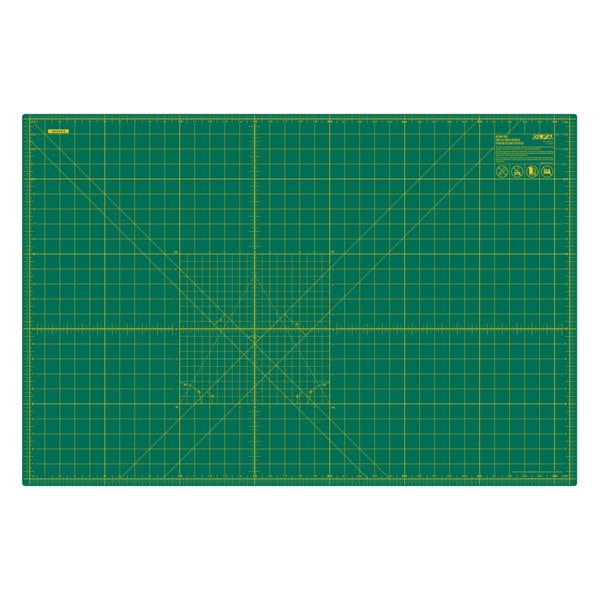
Cotton quilting fabric, a 45mm rotary cutter, a self-healing cutting mat and a 6 by 24 inch quilting ruler make cutting accurate and fast. Piece with a fine 50 weight cotton like Aurifil so seams lie flat, and hold layers with Wonder Clips if pins are hard on your fingers. Our quilting tools for beginners list explains each one, and if you are shopping for a machine, see the best sewing machines for quilting.
Flying Geese block questions
What size is a Flying Geese block?
Any size you like, but it works out neatly at 6, 9 and 12 inches finished because it sits on a 4 by 4 grid. Each grid square is 1 1/2, 2 1/4 or 3 inches finished. Add half an inch for the unfinished size you trim to: 6 1/2, 9 1/2 or 12 1/2 inches. The second chart on this page adds 4, 8, 10 and 16 inch blocks.
How much fabric do I need for one Flying Geese block?
For a single block of any size on this page, a fat quarter of each fabric is plenty, with room to spare. For a 48 by 60 inch throw of 20 blocks at 12 inches, you need 3 1/4 yards of Background, 1 1/2 yards of Main and 1 1/2 yards of Second. The yardage chart on this page covers baby, throw, twin and queen quilts.
Is the Flying Geese block good for beginners?
Yes. If you can sew an accurate quarter-inch seam, you can make it. Sew a test block before cutting for a whole quilt.
Can I print the Flying Geese pattern?
Yes. The free six-page PDF has a lettered drawing and cutting chart, 4 bonus sizes, diagrams for each technique, an assembly map with pressing arrows, size checks to measure as you sew, yardage for four quilt sizes, fixes for common mistakes and a full-page coloring sheet.